When most people hear “rustic,” they picture heavy timber, rough stone, and a raw, unpolished look. But rustic design doesn’t need to feel rugged or unfinished. In the hands of a skilled design-build team, rustic elements can create warmth, timelessness, and architectural elegance—all while maintaining the polish and sophistication of a high-end outdoor space.
We specialize in rustic outdoor living space ideas that are both grounded in natural materials and elevated in execution. Whether you’re envisioning a wooded retreat or a stone-lined entertaining space, the key is intention: every material, texture, and line must serve the overall experience.
What Defines a Refined Rustic Outdoor Living Space?
The most successful rustic outdoor spaces aren’t defined by a specific material or palette—they’re defined by restraint. Rustic design relies on organic textures: real wood, natural stone, warm metals, and lush greenery. But when overdone, it can feel cluttered or chaotic. To keep things refined, BPI follows a balanced approach:
- Use materials that age well and gain character over time
- Contrast rough textures with clean architectural lines
- Limit the number of finish types to keep the space cohesive
- Integrate modern comforts without disrupting the rustic aesthetic
Refined rustic is not about making things look old. It’s about allowing natural materials to speak for themselves—while ensuring every inch of the space functions beautifully and feels considered.
Stonework That Grounds the Space
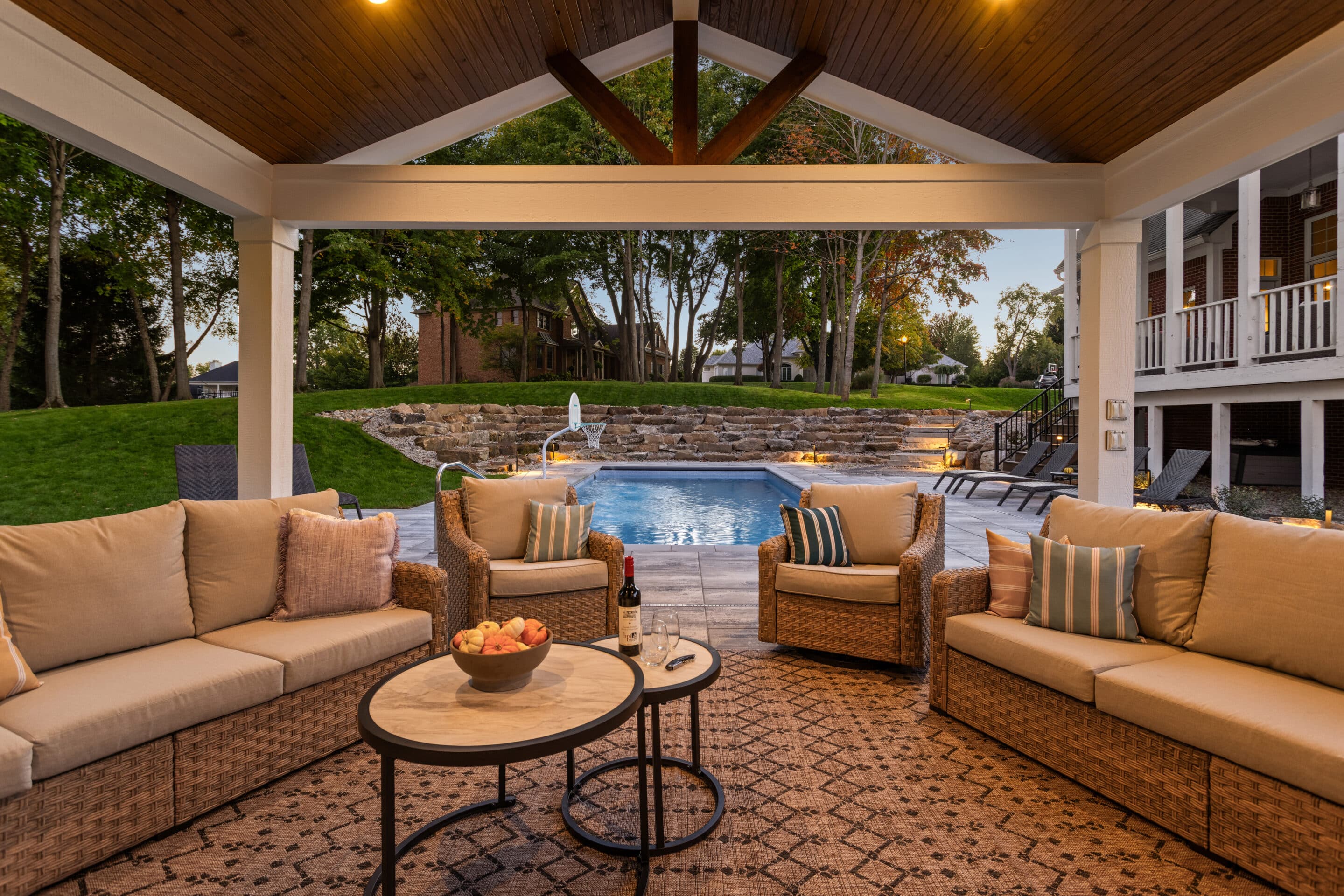
One of the most foundational rustic outdoor living space ideas is stonework. But not all stone is created equal. At BPI, we carefully select natural stone for its tone, texture, and longevity. Whether it’s used for a retaining wall, fire feature, or floor surface, the finish matters. Honed or tumbled stone provides a timeworn feel without being harsh. Dry-stacked walls lend authenticity, while custom-cut pavers offer precision and easy maintenance.
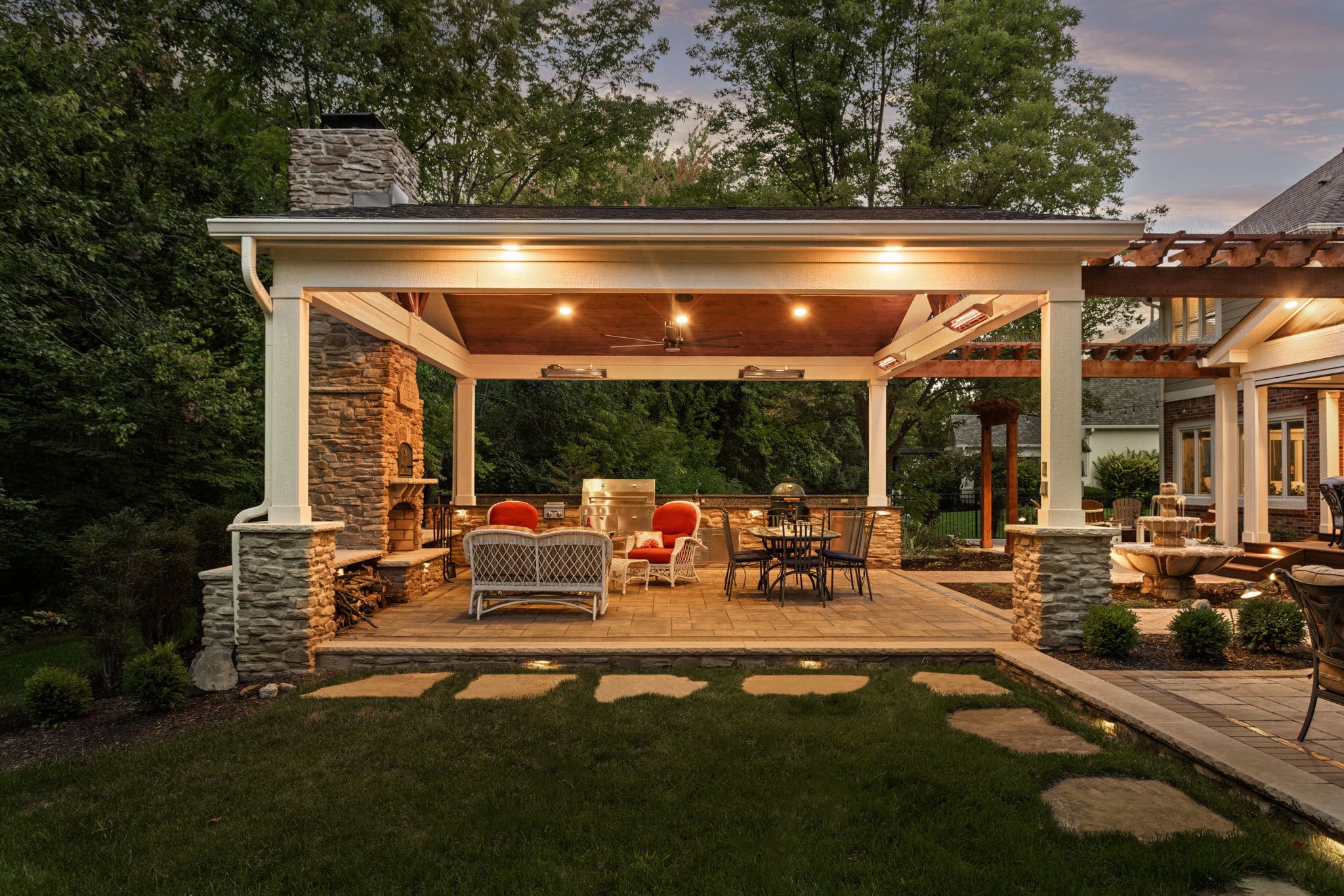
Stone can also create visual anchors. A fireplace or kitchen island wrapped in limestone or fieldstone becomes the focal point of the space. We often balance this with clean horizontal lines—such as a concrete cap or steel detail—to modernize the form without losing the warmth of the material.
Timber and Wood That Add Warmth
Wood is essential in rustic design, but it must be chosen and detailed with care. We avoid untreated or overly raw timbers that can crack, splinter, or weather poorly. Instead, we use kiln-dried, pressure-treated, or hardwood species—such as cedar or ipe—that offer durability and natural beauty.
In covered structures, a tongue-and-groove wood ceiling stained in warm tones can elevate the entire space. For pergolas, we prefer clean joinery, smooth finishes, and balanced proportions. The key is to let the wood feel intentional—not overpowering.
When appropriate, charred wood (shou sugi ban) or blackened finishes can add drama without disrupting the rustic language. These options also offer exceptional weather resistance, especially in transitional climates.

Fire Features That Feel Like Sculptures
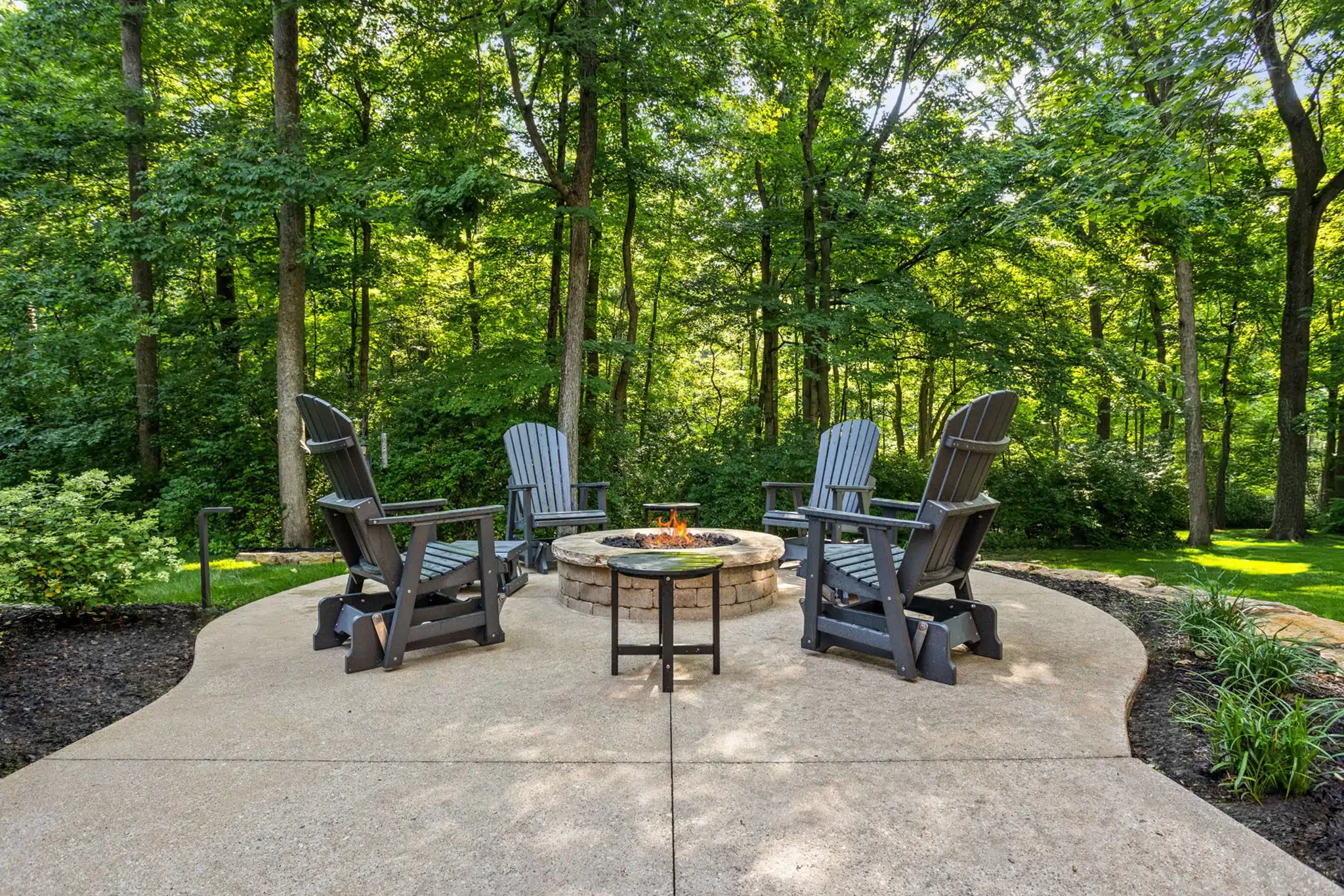
A fire feature is a hallmark of any high-end rustic outdoor living space. It adds warmth, movement, and structure to the environment. While many homeowners opt for standard fire pits, our design team approaches these features architecturally. The goal is to integrate the fire element into the space, not just place it within it.
Custom-built fire pits with stone surrounds, built-in seating, and integrated lighting become part of the landscape. Linear fire features in Corten steel or custom masonry offer a more tailored option for those who want clean lines within a rustic framework.
We also consider the height, scale, and proximity to other program elements such as lounges or dining areas. A fire feature should define the mood—but not dictate the layout.
Lighting That Enhances, Not Competes
Lighting plays a critical role in making rustic spaces usable and inviting after dark. However, overly bright or modern fixtures can clash with the character of natural materials. We specify lighting that blends into the architecture: low-profile step lights, downlighting in wood ceilings, and recessed fixtures in stone or structure.
Ambient lighting—such as warm string lights or sconces—can work well when strategically placed and dimmable. But we avoid visible cables or temporary solutions that diminish the integrity of the design. When done right, outdoor lighting should feel like it belongs—not like it was added later.
Landscape Elements That Soften the Edges
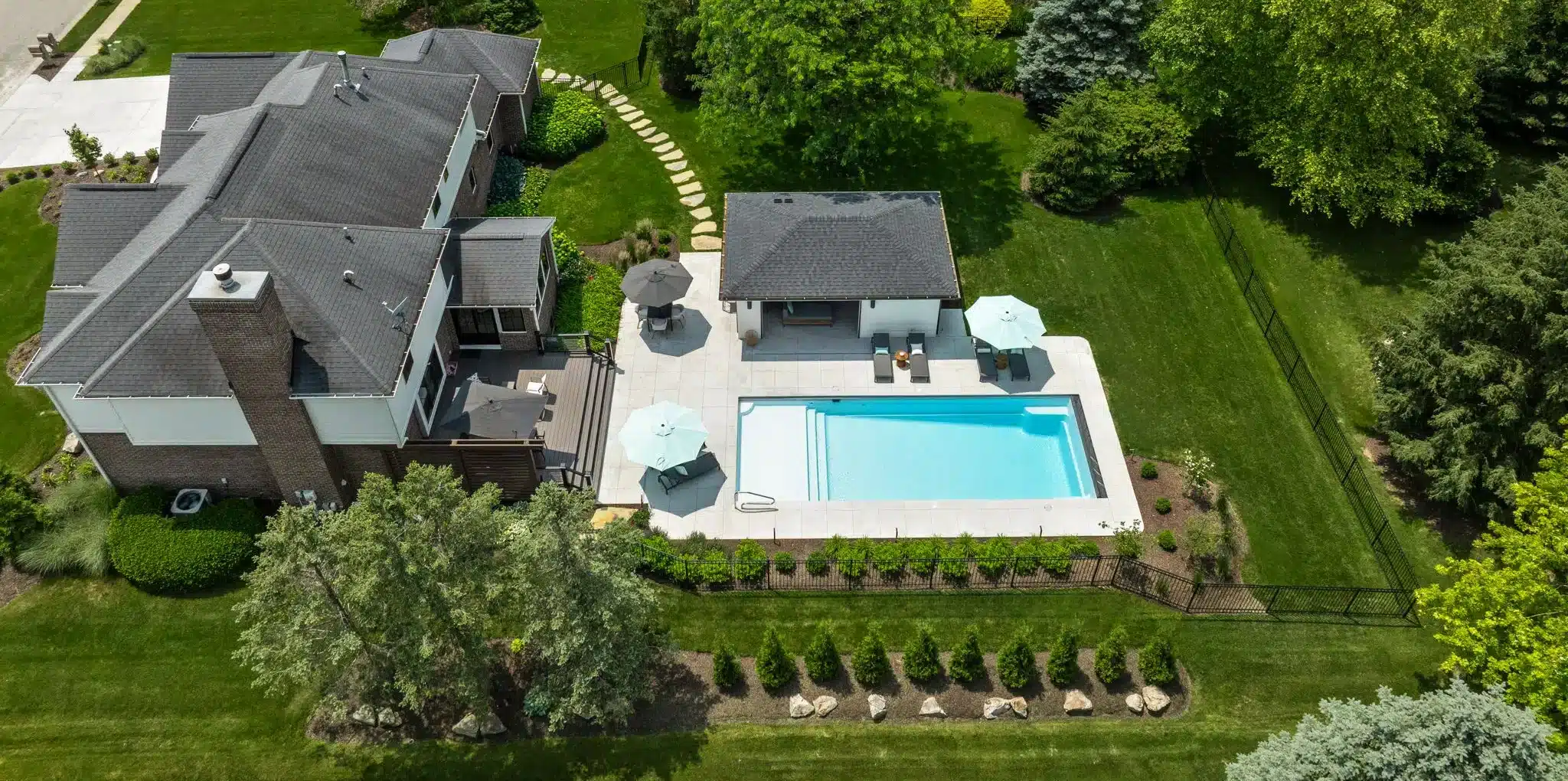
Refined rustic design is not just about hardscape—it’s about how the space lives within the landscape. At BPI, we integrate plantings that feel wild yet controlled: ornamental grasses, native perennials, low evergreens, and layered beds that mimic natural forms.
Strategic plant placement can also provide shade, privacy, and seasonal interest. In more wooded settings, we let the existing canopy guide the layout, preserving views and creating dappled light. In open yards, we may use sculptural trees or stone-lined beds to frame the space and soften the architectural lines.
Gravel paths, crushed stone borders, and moss between pavers are subtle touches that further connect the space to nature—without making it feel rustic in the rough sense.
Furnishings That Support the Architecture
One of the biggest mistakes in rustic outdoor living spaces is furniture that feels out of place. Heavy wood benches or wrought iron sets may match the rustic aesthetic—but they often sacrifice comfort and proportion.
We recommend furnishings that complement the architecture in tone and scale. Teak, powder-coated metal, and woven materials offer natural texture without overwhelming the space. Neutral cushions and custom upholstery add softness and contrast—especially against stone and wood.
In many BPI projects, we integrate custom built-ins such as benches, planter boxes, or kitchen counters that double as seating. These features blend structure and function, reducing visual clutter and maintaining a refined look.
Bringing It All Together
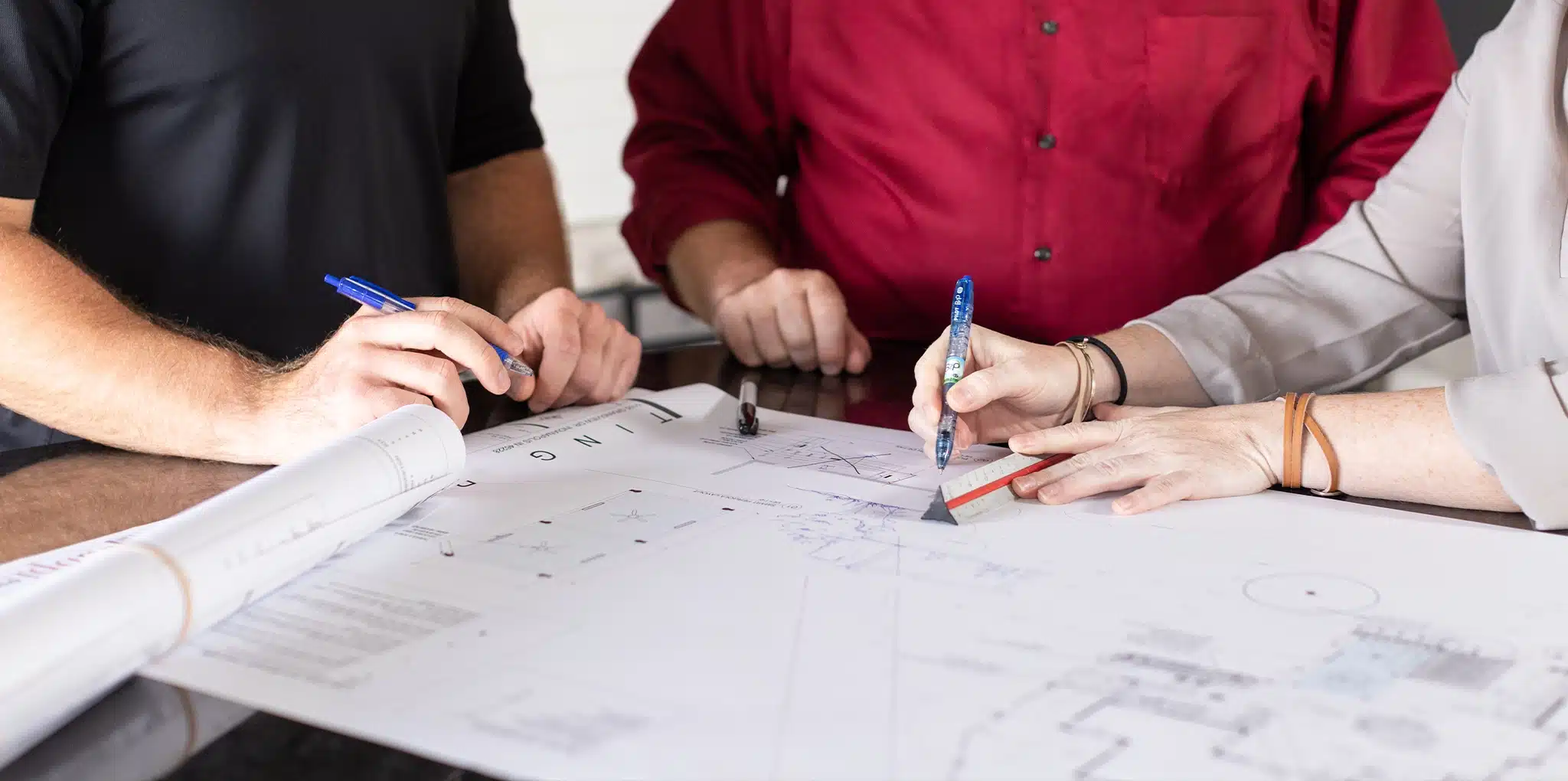
Refined rustic outdoor living is about more than visual style—it’s about how the space feels, functions, and weathers over time. At BPI Outdoor Living, we approach rustic design with the same level of precision, material understanding, and architectural thinking that we bring to every project. The result is a space that feels grounded in nature, but elevated in execution.
If you’re exploring rustic outdoor living space ideas and want a design that balances timeless character with modern livability, we’re ready to bring that vision to life—with clarity, craft, and care.
To see how we’ve brought refined rustic design to life for our clients, visit our portfolio or schedule a consultation.
Frequently Asked Questions
What are the key elements of a rustic outdoor living space?
The foundation of any rustic outdoor living space includes natural materials like wood, stone, and metal, layered with thoughtful textures and landscaping. Elements such as a wood-plank ceiling, stone fireplace, built-in seating, and native plantings contribute to the style. The key is balancing warmth and texture with modern functionality, so the space feels natural but not unfinished.
How do you make a rustic outdoor space feel high-end?
To elevate a rustic aesthetic, focus on quality over quantity. Use fewer materials, but invest in craftsmanship—such as dry-stacked stone, custom woodwork, and architectural lighting. Seamless transitions, intentional sightlines, and well-integrated furnishings all contribute to a refined feel. At BPI, we use custom design solutions to ensure rustic doesn’t mean rough.
What are the best materials to use in a rustic outdoor space?
Durable, natural materials that age gracefully are ideal for rustic outdoor living space ideas. These include flagstone, limestone, reclaimed or treated wood, Corten steel, and natural clay or ceramic. When used thoughtfully and in the right proportion, these materials offer longevity and beauty without sacrificing sophistication.
Can a rustic outdoor space work with a modern home?
Yes. Rustic and modern design elements can complement each other when balanced properly. For example, using clean-lined furniture within a wood and stone structure creates a visual dialogue between rustic texture and modern form. It’s less about matching styles and more about thoughtful contrast and cohesion.
How do you light a rustic outdoor living area?
Lighting should enhance natural textures without overpowering them. Consider using recessed downlights in wood ceilings, subtle step or path lighting, and warm-toned uplighting for stone or landscaping. Avoid overly bright or modern fixtures that can feel out of place. A layered lighting plan ensures the space remains functional and visually inviting after dark.