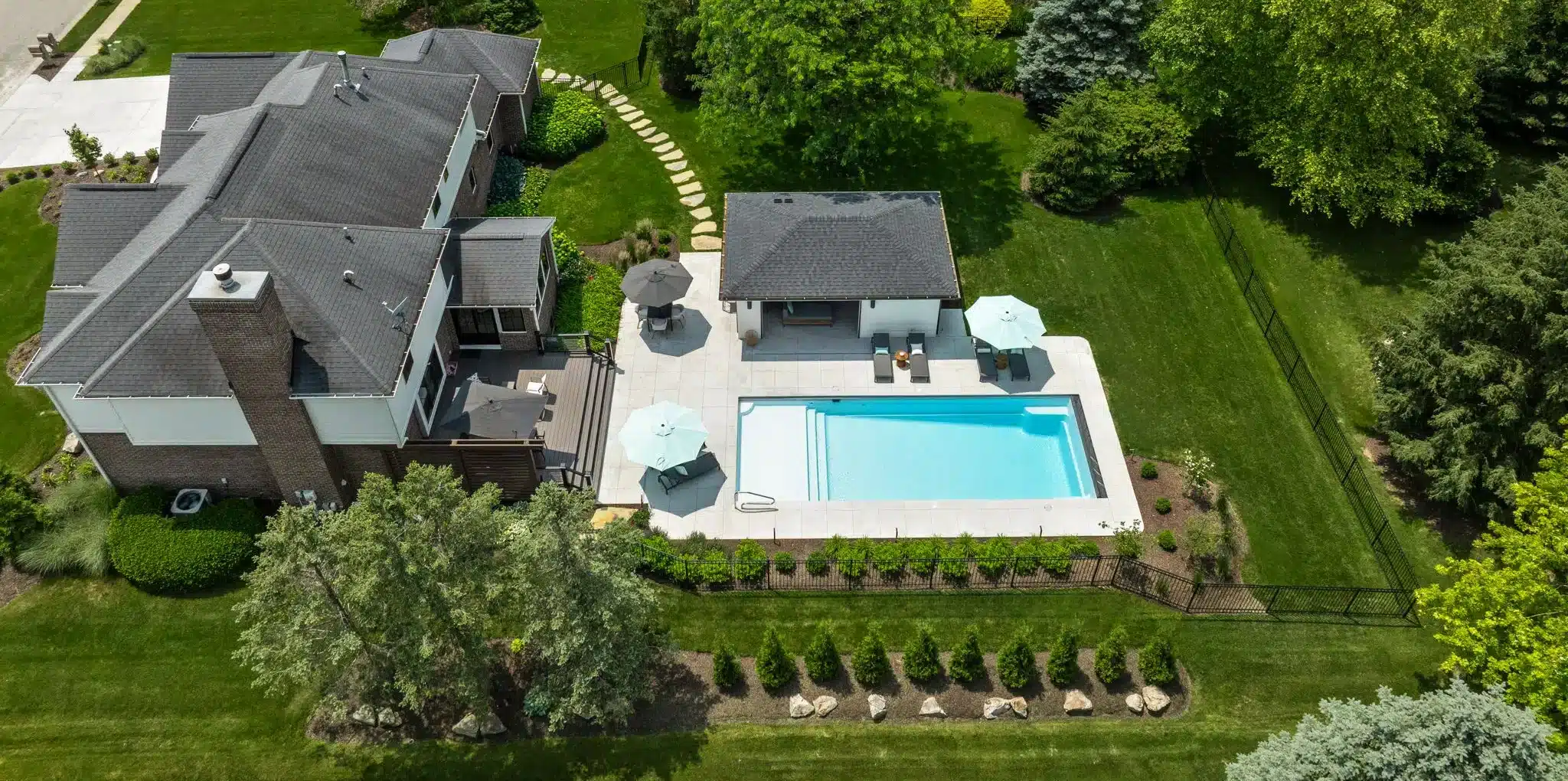
Autumn in Central Indiana is an invitation to reclaim your outdoor living space. Cooler air, earlier sunsets, and richer colors set the stage for intimate gatherings—if the space is designed for comfort and control. This guide shares Fall Outdoor Living Ideas from our landscape architects, exploring how they think through fall-forward environments: heat and shelter, light and sound, materials and circulation, and a planting palette that actually peaks in October and November.
Start With Program, Microclimate, and Circulation
Begin by mapping how you will use the space in cooler weather: relaxed fireside evenings for six, game-day watch parties for twelve, quiet coffee at sunrise, or all of the above. From there, study microclimate—prevailing winds, sun angles, and adjacent architecture—to place heat, shelter, and seating where they will perform. Keep circulation clean and dry: 4–5 feet of clear walk between doors, kitchen, and seating prevents bottlenecks and coat-snags. This planning discipline is how we deliver a refined result with a clear process from concept to completion.

Elegant Heat: Fire Features and Built-In Fireplaces
Fire is the emotional anchor of a fall space. Consider three tiers:
- Contemporary fire tables for flexible lounge groupings. Linear burners with wind-guard glass maintain flame performance and allow cocktail-height surfaces.
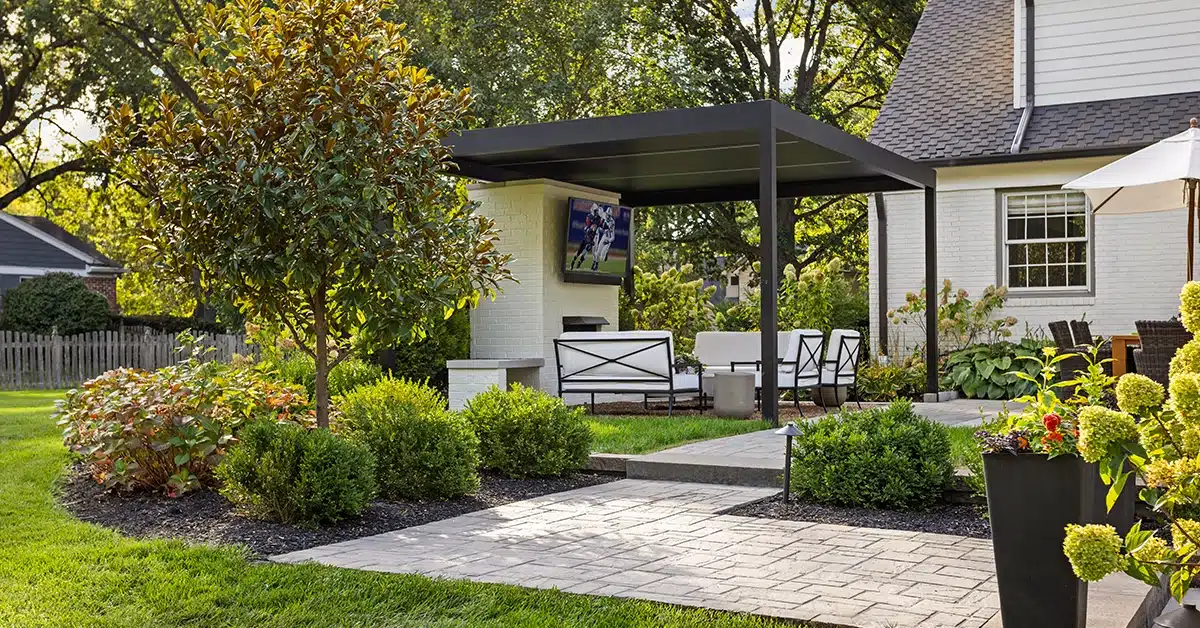
- Masonry fireplaces for architectural presence. A tall firebox with an extended throat improves draft; flanking wood niches and an integrated TV recess (protected by a lift-down panel) keep the elevation tidy.
- In-floor radiant or heated seating edges, where practical, to take the chill off the stone underfoot and keep guests comfortable longer.
Specify adjustable BTUs and smart ignition. Pair each flame element with deep-seat upholstery, blankets in a concealed bench, and side tables for glasses—comfort equals dwell time.
Shelter on Demand: Luxury Louvered Pergolas
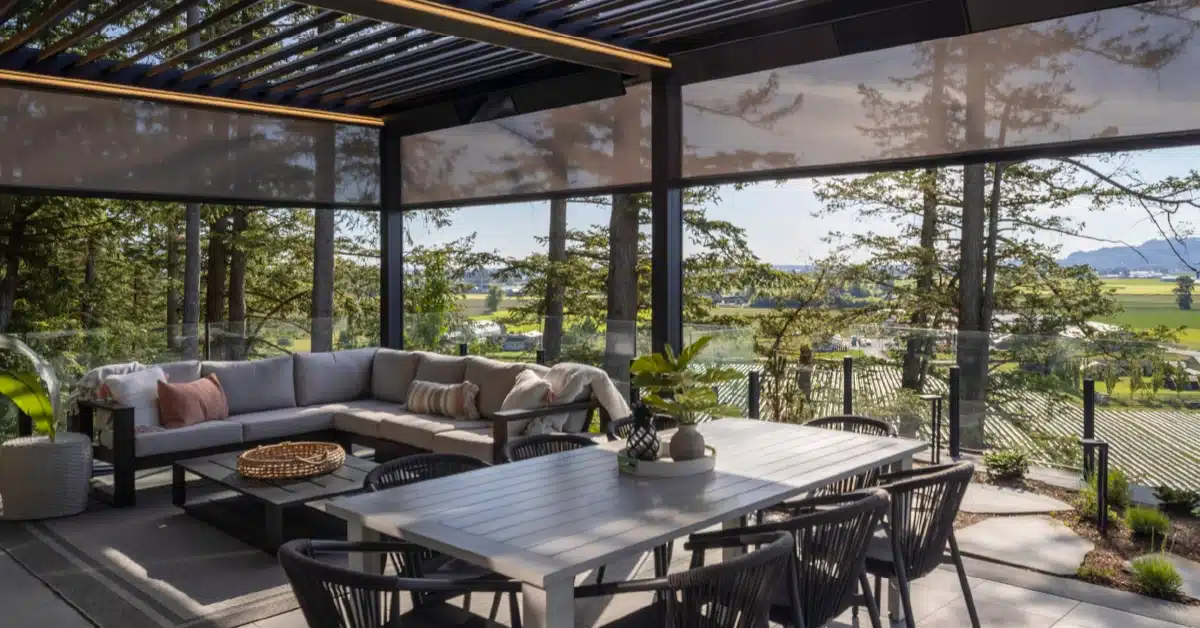
Wind and intermittent rain are what end fall evenings early. A motorized, louvered pergola solves for both—especially when it’s a system designed for four-season performance. We recommend a Renson® louvered pergola with integrated electric heaters, dimmable LED lighting, motorized screens, and fixed or sliding glass panels to buffer wind without losing the view. Glass corners create a protected microclimate; screens preserve airflow when the fire is roaring. The result is control: louvers open to capture low autumn sun, close at the tap when a shower passes, and the evening continues.
Layer the Lighting (and the Audio)
Shorter days demand excellent lighting. Treat it like an interior:
- Ambient: warm 2700–3000K down-lighting from the pergola canopy and soffits; grazing along stone or wood cladding to reveal texture.
- Task: discrete under-counter strips at the outdoor kitchen and reading-level lamps in lounge zones.
- Accent: beam-spread uplights on key trees (serviceberry, river birch) and low-glare step lights along transitions.
Put scenes on a simple schedule: “dusk on, 11 p.m. off,” with a one-button “entertain” preset. Complement with a zoned outdoor audio system—flush canopy speakers for the covered area, landscape satellites and a hidden sub for even coverage on the terrace—so conversation is clear at lower volumes.
Surfaces, Furnishings, and Weather Strategy
Choose high-density porcelain or sealed natural stone with a lightly textured finish to improve traction in leaf season. On furnishings, specify performance fabrics, quick-dry cushions, and mixed materiality—powder-coated aluminum frames, ipe or thermally modified wood accents, and stone or Dekton® tables—to echo the architecture.
Weather strategy matters: store cushions in a ventilated bench, choose removable rugs, and design a broom-clean path to the door. If you tailgate at home, add an under-counter fridge, warming drawer, and a compact smoker with a dedicated make-up air path.
Planting for Peak Fall Interest
A four-season planting plan ensures your space looks its best when the pool is closed and the fire is on. In our climate, consider:
- Structure (evergreen bones): boxwood, yew, and upright American holly to keep hedges strong when deciduous plants drop leaves.
- Color and fruit: Fothergilla and Virginia sweetspire (Itea ‘Little Henry’) for scarlet-to-amber foliage; serviceberry (Amelanchier) for coppery leaves and lingering blue-black fruit; viburnum cultivars for burgundy leaves and berry clusters; beautyberry (Callicarpa) for bright purple fruit that pops behind glass panels.
- Texture and movement: ornamental grasses such as switchgrass (‘Northwind’ or ‘Shenandoah’) and little bluestem that glow in low light and stand through winter.
- Late bloom and fade: panicle hydrangea as flower heads blush and dry beautifully; asters and sedums for pollinator-friendly color into frost.
Keep maintenance premium but practical: deep fall mulch, selective deadheading, and protected irrigation components so you can run the system for late-season transplants, then winterize efficiently.
Zoning, Codes, and Comfort Clearances
Mind safety and comfort: maintain proper clearances from combustible structures for heaters and fire features; integrate make-up air and venting at the outdoor kitchen; and plan snow storage so drifts don’t block doors or crush plantings. A disciplined, code-forward approach preserves the luxury experience clients expect from a turnkey design-build partner.
Bringing It Together: A Fall-First Layout
A typical fall-forward composition might place a lounge under a Renson pergola with sliding glass on the windward side, a masonry fireplace anchoring one elevation, and a linear fire table extending the social footprint onto the terrace. Layer scene-based lighting, add a chef’s station that works with gloves on (big pulls, clear prep surfaces), and you have a space that welcomes friends on a Tuesday night as easily as it hosts a Saturday watch party.