An outdoor kitchen should do more than hold a grill.
At its best, it becomes the center of a better outdoor experience—one where cooking, serving, gathering, and relaxing all happen naturally in the same environment. It keeps the host connected to the moment. It supports conversation instead of interrupting it. It makes the entire backyard feel more usable.
That is why great outdoor kitchen design is never only about appliances. It is about flow, comfort, storage, materials, and how the kitchen works with the rest of the outdoor living space.
If you are thinking about adding an outdoor kitchen, here are the design decisions that matter most.

Start With How You Like to Host
Some homeowners want a focused grilling station that supports casual family dinners. Others want a full entertaining environment with refrigeration, storage, serving space, bar seating, and room for multiple people to gather.
Both can be beautiful. The important thing is that the kitchen matches the way you actually entertain.
Think about:
- how many people you usually host
- whether you prep outside or mostly finish food there
- whether guests gather around the cook or sit nearby
- whether you want the kitchen to serve weeknight convenience, special events, or both
The more honestly you answer those questions, the better the design will fit your life.
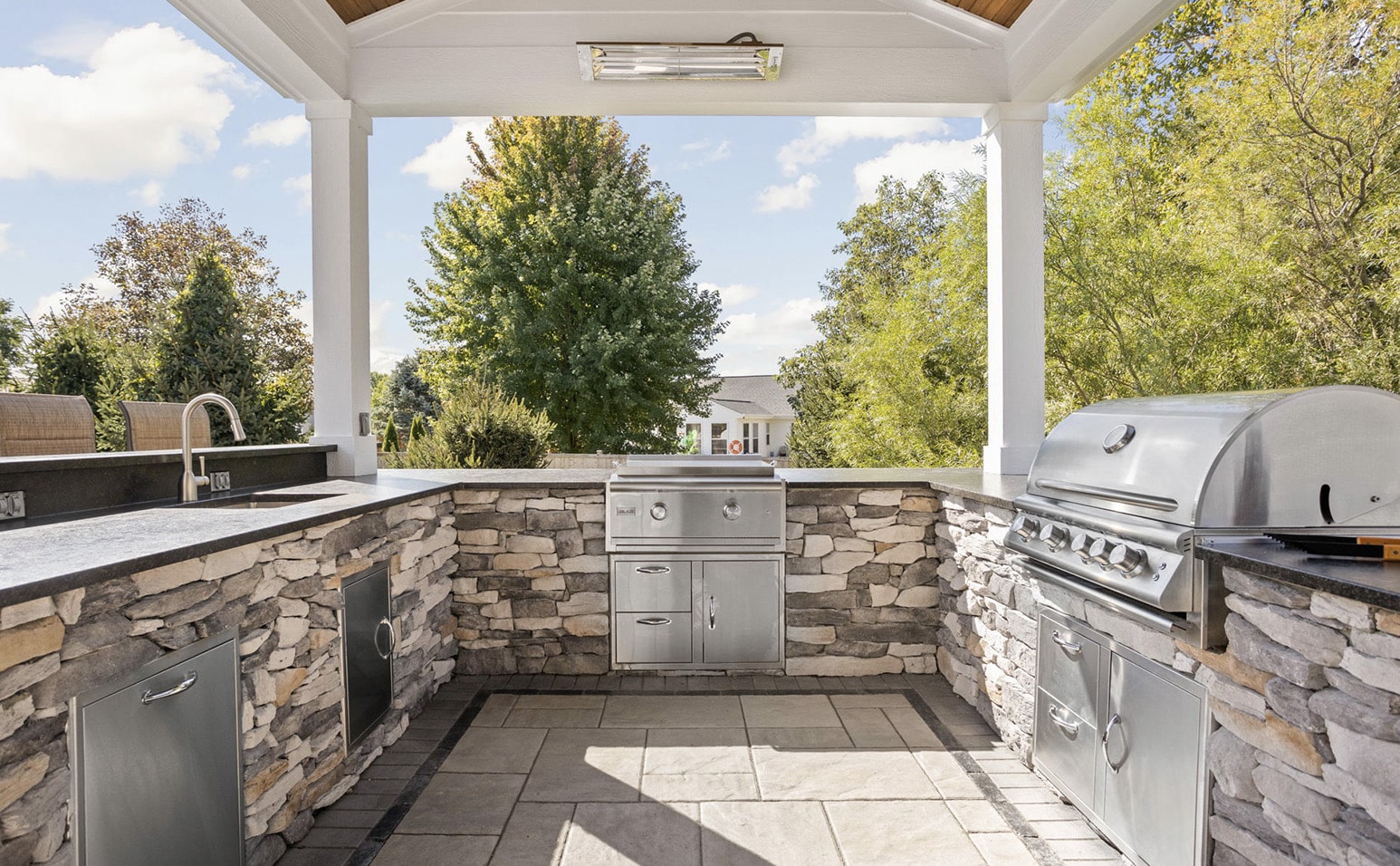
Divide the Kitchen Into Working Zones
Indoor kitchens work well because they separate tasks clearly. Outdoor kitchens benefit from the same logic.
Cooking should have enough breathing room to be safe and comfortable. Prep space should sit where it is easy to use, not squeezed into whatever area is left over. Cold storage should support the way you move through the space. Serving surfaces should help food travel smoothly to the dining or lounge area.
When those zones are missing, an outdoor kitchen feels cramped quickly. When they are planned well, the space feels easy and intuitive.
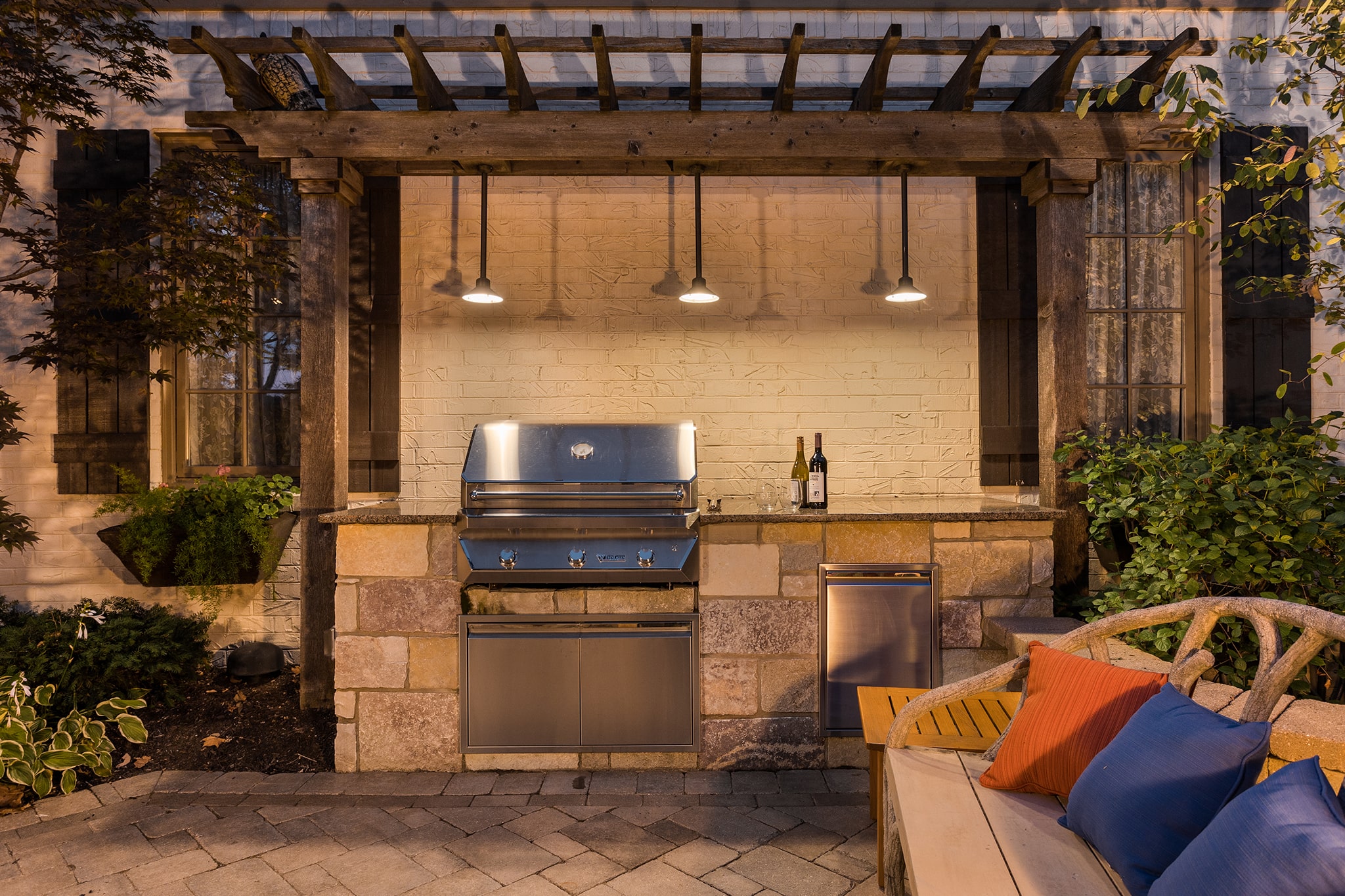
Counter Space Matters More Than Most People Expect
A premium grill may get the attention, but generous counter space is usually what makes the kitchen feel truly functional.
You need space for trays, ingredients, drinks, serving pieces, and the small moments that happen during real entertaining. Without enough landing room, even a beautiful kitchen can feel frustrating.
This is one of the most common design mistakes we see in underplanned outdoor kitchens: the appliance package gets all the focus, while the working surfaces get whatever space is left.
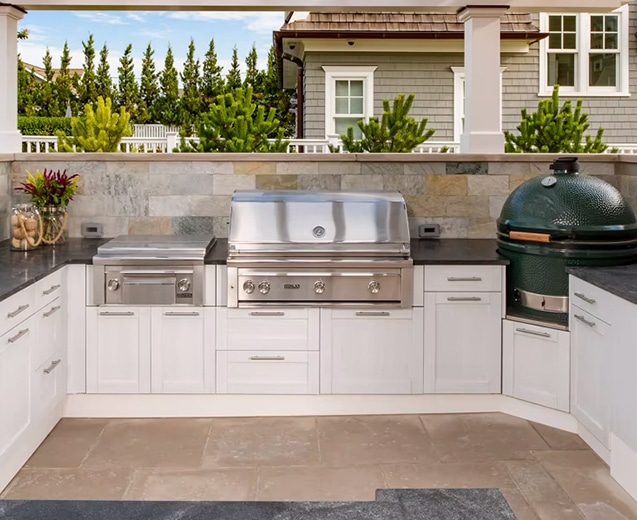
Storage Is Part of the Luxury
When outdoor kitchens feel effortless, storage is usually one reason why.
Thoughtful storage keeps tools, serving pieces, spices, cleaning items, and entertaining essentials close at hand. It reduces trips back inside. It helps the space feel orderly. And it makes the kitchen easier to use on a spontaneous evening instead of only when everything has been prepared in advance.
Luxury does not always look like more. Often, it looks like better planning.
The Kitchen Should Relate to the Rest of the Space
An outdoor kitchen is almost never the only thing happening in the backyard.
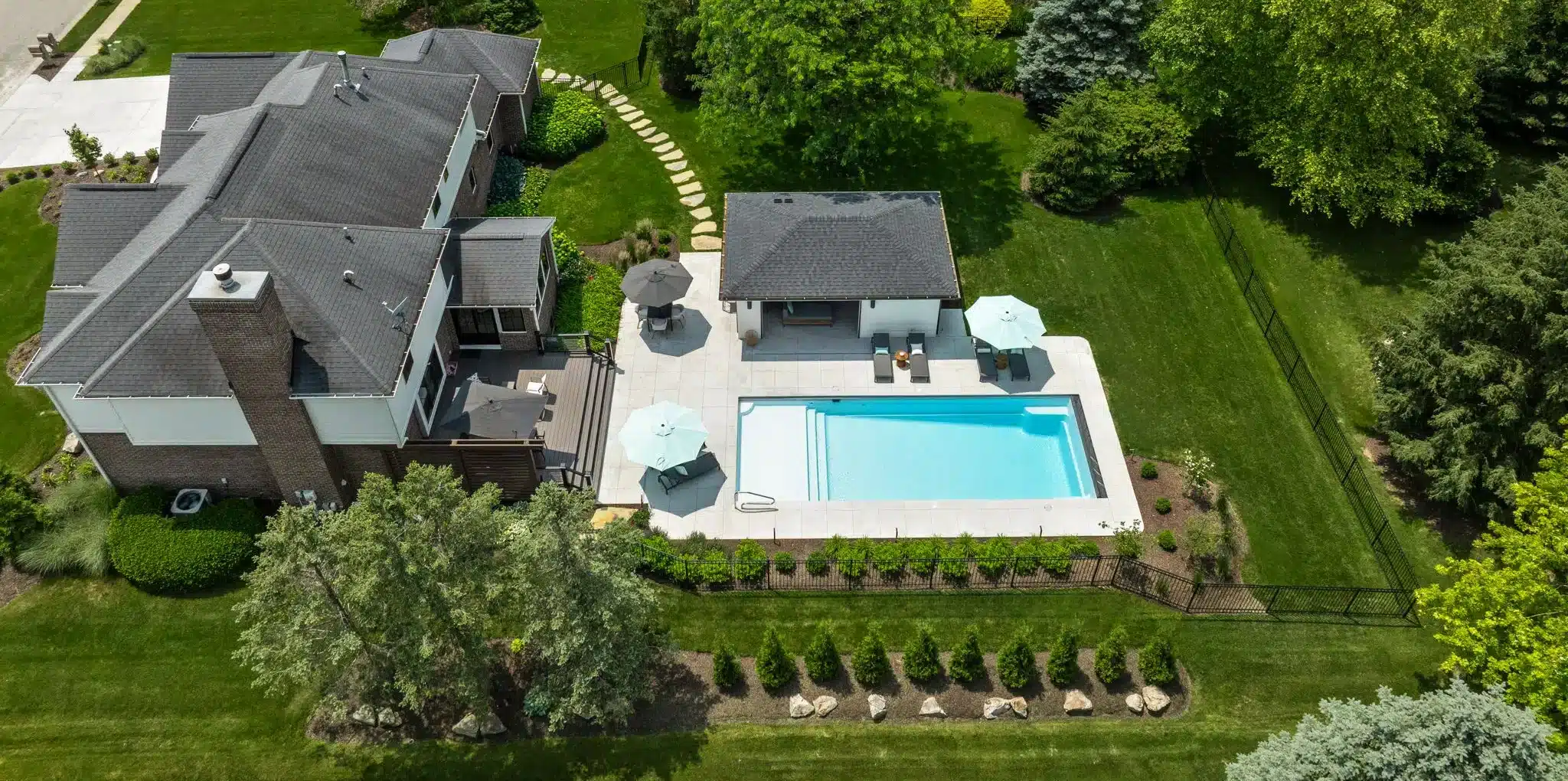
There may be a dining area, a fire feature, a covered living zone, a poolside lounge, or a patio used for conversation after dinner. That is why the kitchen should be positioned as part of the larger outdoor environment.
Questions worth asking include:
- Can the cook still see and talk with guests?
- Is the dining area easy to reach?
- Does traffic move comfortably around the kitchen?
- Is there nearby shade or shelter?
- Does the kitchen visually belong to the rest of the design?
When the answer is yes, the whole space feels more refined.
Covered Living Can Make an Outdoor Kitchen More Usable
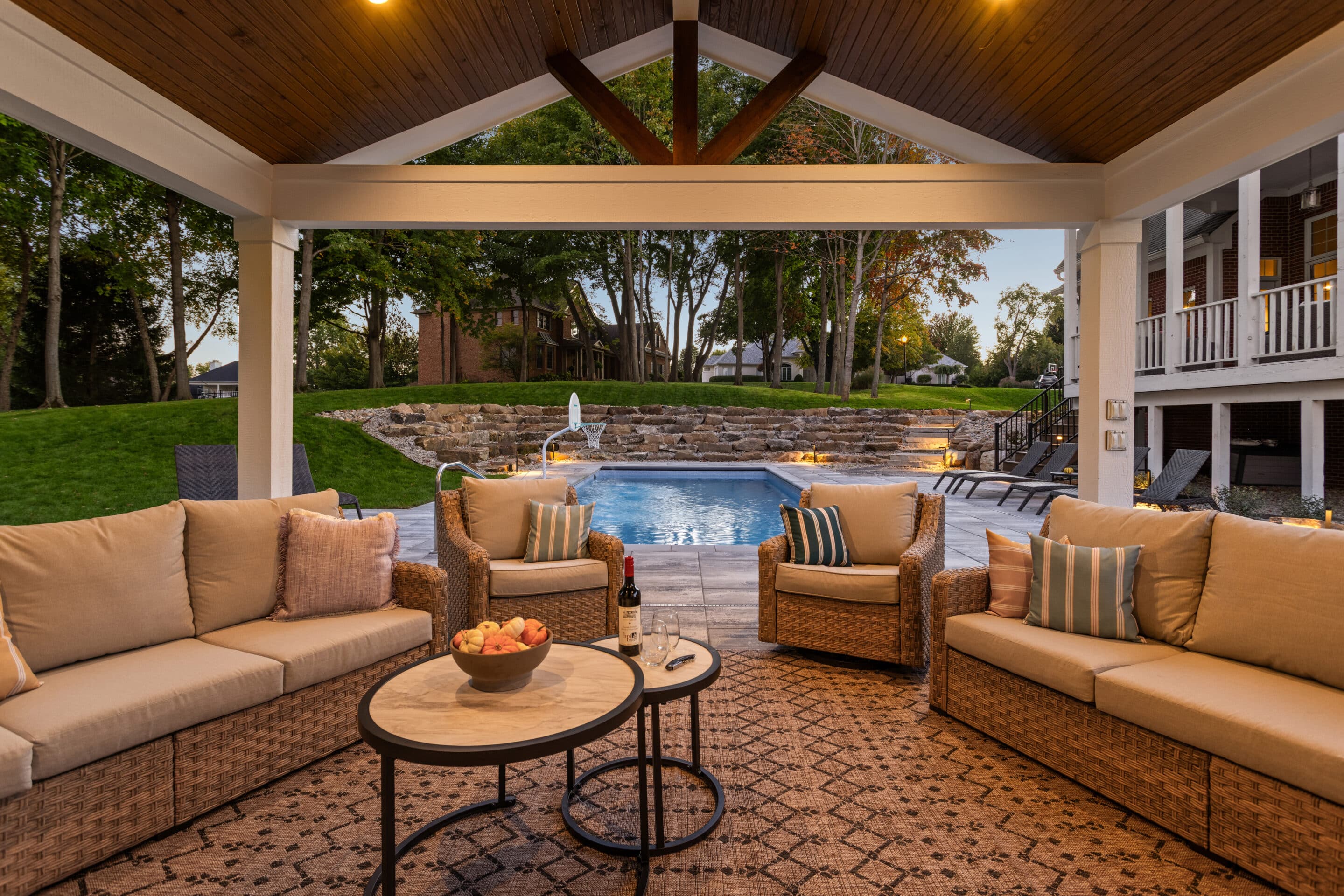
For many homeowners, a kitchen becomes more valuable when it is connected to some form of covered living.
That might mean a pergola that shapes the dining area, a pavilion that makes the space feel like an outdoor room, or another covered element that adds comfort and architectural presence. The right structure can help with shade, define the gathering space, and make the kitchen more comfortable to use throughout the season.
The key is integration. Covered living should support the kitchen experience, not compete with it.
Utilities, Lighting, and Comfort Should Not Be Afterthoughts
The details that make an outdoor kitchen feel polished are often the ones homeowners notice most once they start using the space.
Task lighting helps with cooking after dark. Ambient lighting makes the space feel inviting. Utilities need to be planned cleanly. Seating needs to feel intentional. Material transitions should be resolved, not improvised.
These decisions are not small. They are what move a kitchen from “nice feature” to “space people want to spend time in.”

Avoid Designing a Kitchen in Isolation
The biggest mistake in outdoor kitchen design is treating the kitchen as a stand-alone purchase instead of part of the outdoor experience.
A kitchen can look impressive on its own and still feel disconnected from the home, the patio, the circulation, and the social life of the space. The strongest result comes when the kitchen is designed as part of a complete outdoor living plan.
That is where design-build thinking matters. It helps every decision support the next one.
Conclusion
If you are ready to create an outdoor kitchen that feels as good to use as it looks, BPI Outdoor Living can help you design it as part of a complete outdoor living environment. Request a design consultation to start the conversation.
FAQ
Q: What makes an outdoor kitchen feel effortless?
A: Usually it is the combination of flow, counter space, seating adjacency, storage, and comfort planning. The best kitchens support the whole experience around them.
Q: Does every outdoor kitchen need seating?
A: Not every one, but many benefit from some form of nearby seating or gathering zone so the cook stays connected to the people using the space.
Q: Should an outdoor kitchen be covered?
A: Not always, but many kitchens perform better with some degree of structure or adjacent covered living for shade and comfort.
Q: Can an outdoor kitchen be part of a larger backyard redesign?
A: Absolutely. In many of the best projects, the kitchen is one zone within a broader outdoor living environment that includes patios, covered living, lighting, and lounge space.

J.D. Durst brings more than 24 years of landscape design/build experience to BPI Outdoor Living. A Purdue-trained landscape architect and BPI’s President/CEO, J.D. leads with a focus on functional, distinctive outdoor designs and an exceptional client experience from concept to completion.